The Threat Isn’t AI, It’s People


.svg)


AI is diabolical. It keeps me up at night.
Why? Because of the human element.
This fear presents in so many different ways, but falls into three main areas. I worry that our organization could lose qualified, senior employees because another company offers them an easier job, thanks to AI. I fear that some employees are seen as obsolete due to AI making their job functions less important.
But mainly, I see the threats that AI brings, those that can cause good employees to accidentally make mistakes. They probably wouldn’t dream that those actions are a mistake, but they hurt the organization all the same. That’s nightmare territory.
It’s already an understatement to say that AI is moving fast. Companies’ use of AI is changing every day. The critical path now is to help organizations and our people defend against AI.
The threat isn’t simply that AI is accelerating cyberattacks faster than we can build defenses. The true danger lies in how quickly the people we trust most, our employees, our teams, can cause problems unbeknownst to them by using unmonitored AI environments.
Those people are not being malicious. They’re trying to do their job more efficiently by using AI. This is where invisible breaches happen.
A burned-out engineer might paste a spreadsheet containing social security numbers into an AI assistant to expedite a deadline. A developer might integrate a “productivity tool” that secretly contains an AI API phoning home to parts unknown. Those actions and hundreds more can open up the business in a way that can't be explained. Welcome to invisible breaches.
In the past, security leaders have traditionally responded to emerging threats by shutting things down. They block ports, ban devices, reduce access, and my all-time favorite, schedule more mandatory training for employees. How do I say this nicely? It's an approach that is simply obsolete.
In 2025 and beyond, organizations have to figure out how to use AI to fight adversarial AI. As fast as people can use AI, it should work as fast so we can defend against the invisible breaches and the adversarial attacks at the same time. We can’t expect people to stop using their AI-powered tools that make work faster or more efficient, but we can expect them to layer on a level of security within those solutions.
First of all, we need to stop talking about AI like it’s one monolithic force. It isn’t. It’s a stack of threats, behaviors, and operational surfaces and each one has its own kill chain, controls, and business consequences. We need to break it down into its parts and conduct a real campaign to defend ourselves.
If organizations don’t learn how to defend against AI or deploy a solid defense strategy, negative consequences will begin to spring up, such as rising insurance premiums, increasing compliance audits, privacy fines that will multiply, evaporating trust in a company’s brand, and the most obvious: data breaches.
Requirements to securely utilize AI should include:
At the end of every day, organizations must stop treating AI as a shiny new toy and start treating it like the next wave of tech that needs our full attention. We need to use it for good to combat the risks.
Defending our organization’s crown jewels in an era of invisible breaches as well as consistent targeted attacks, we must arm ourselves with AI that is at least as fast as the AI attackers are deploying, and we need to make everything transparent by illuminating all AI-enabled workflows.
The future of cybersecurity won’t belong to those who build the most AI models, but rather to those who build the most trustworthy intelligence. The future is still about the people. They are our greatest strength, our greatest risk, and are a future worth defending.
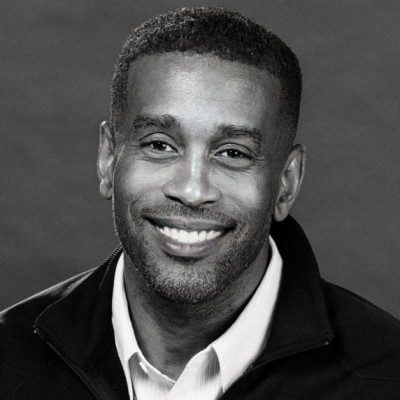
Roland Palmer is VP of Security & Compliance at Sumo Logic

Weekly insights from the people shaping the future of technology.

Insights from leading voices in technology
Latest video podcasts
Quick takes
Insightful articles on tech trends




Whether you’re a reader, contributor, or tech enthusiast, we’d love to hear from you. Use the form below to send us a message — we’ll get back to you as soon as we can.